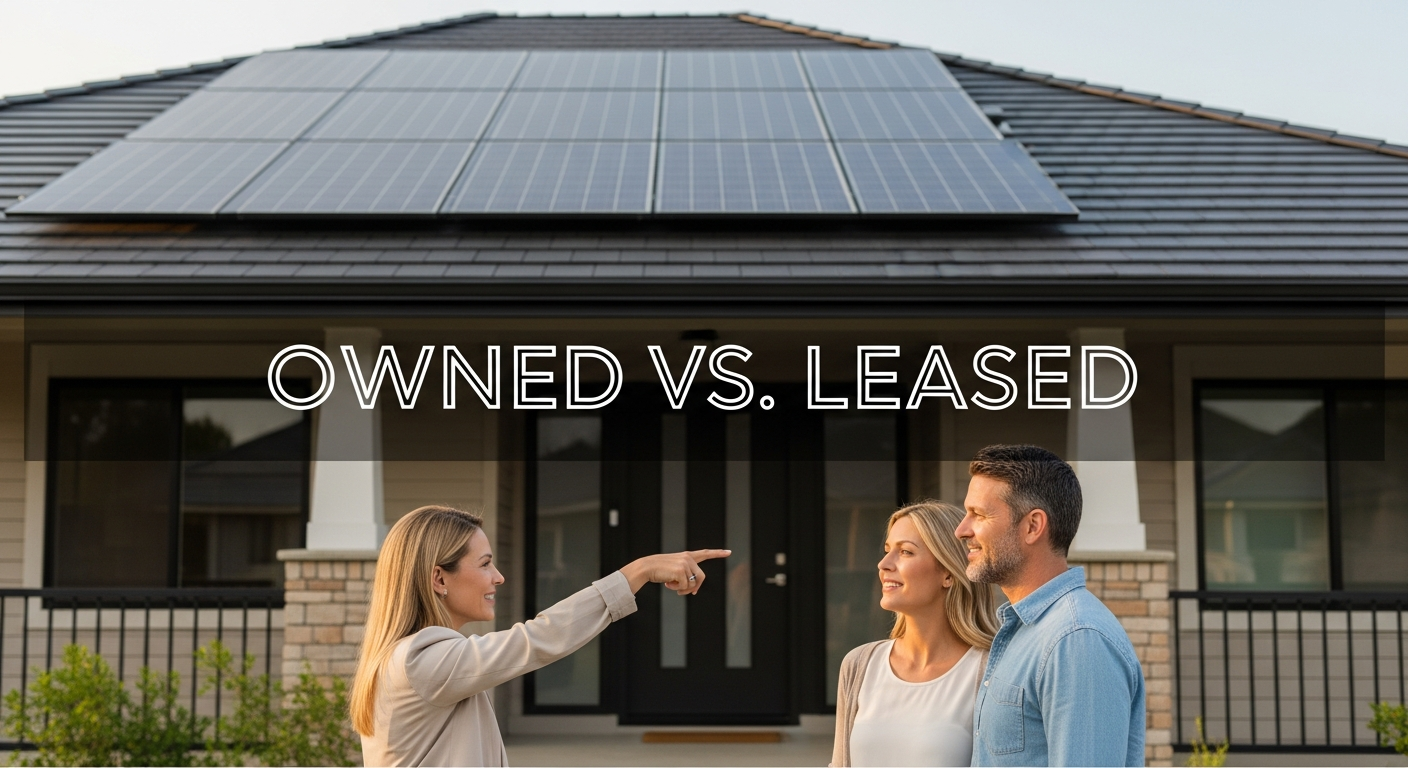
Solar energy has gone from novelty to neighborhood staple in a surprisingly short time. If you're shopping for a home or thinking about selling one with panels on the roof, there's more to the story than just lower utility bills. The solar question in real estate comes down to one fundamental thing: who owns the panels?
If the system is owned outright, that's generally good news for everyone. Owned panels are treated much like other permanent home improvements, they can add real value to the property, and that value often shows up in the appraisal. That said, not every appraiser has solid comparable data on solar homes, so how much value actually gets recognized can vary depending on the local market and the age and efficiency of the system itself.
Leased panels are a whole different story. When the previous owner leased the system from a solar company, that contract doesn't disappear at closing, it transfers to whoever buys the home. That means a new monthly payment, specific lease terms and potentially an impact on how a lender calculates your debt load. Sellers with leased systems need to put everything on the table: the full lease agreement, how long it runs and exactly how the transfer process works. Buyers need to read every word of it.
Whether the panels are owned or leased, documentation is everything. Energy production records, warranties, purchase or lease agreements, maintenance history, all of it matters during due diligence. You're not just evaluating the house, you're evaluating the system attached to it. A well performing system that's clearly documented is an asset. A mystery installation with no paperwork is a red flag.
The practical questions for buyers go beyond the contract itself. How much have the panels actually reduced utility bills? Who handles maintenance if something breaks? What happens when the roof needs work? These are fair questions and any seller worth working with should be able to answer them.
In my view, solar is one of those topics that rewards a little extra due diligence upfront, the buyers and sellers who take time to understand the ownership structure and get the paperwork straight tend to come out ahead. It's not complicated once you know what to look for. Incidentally, this is worth keeping on the radar as solar adoption continues to grow across the region.