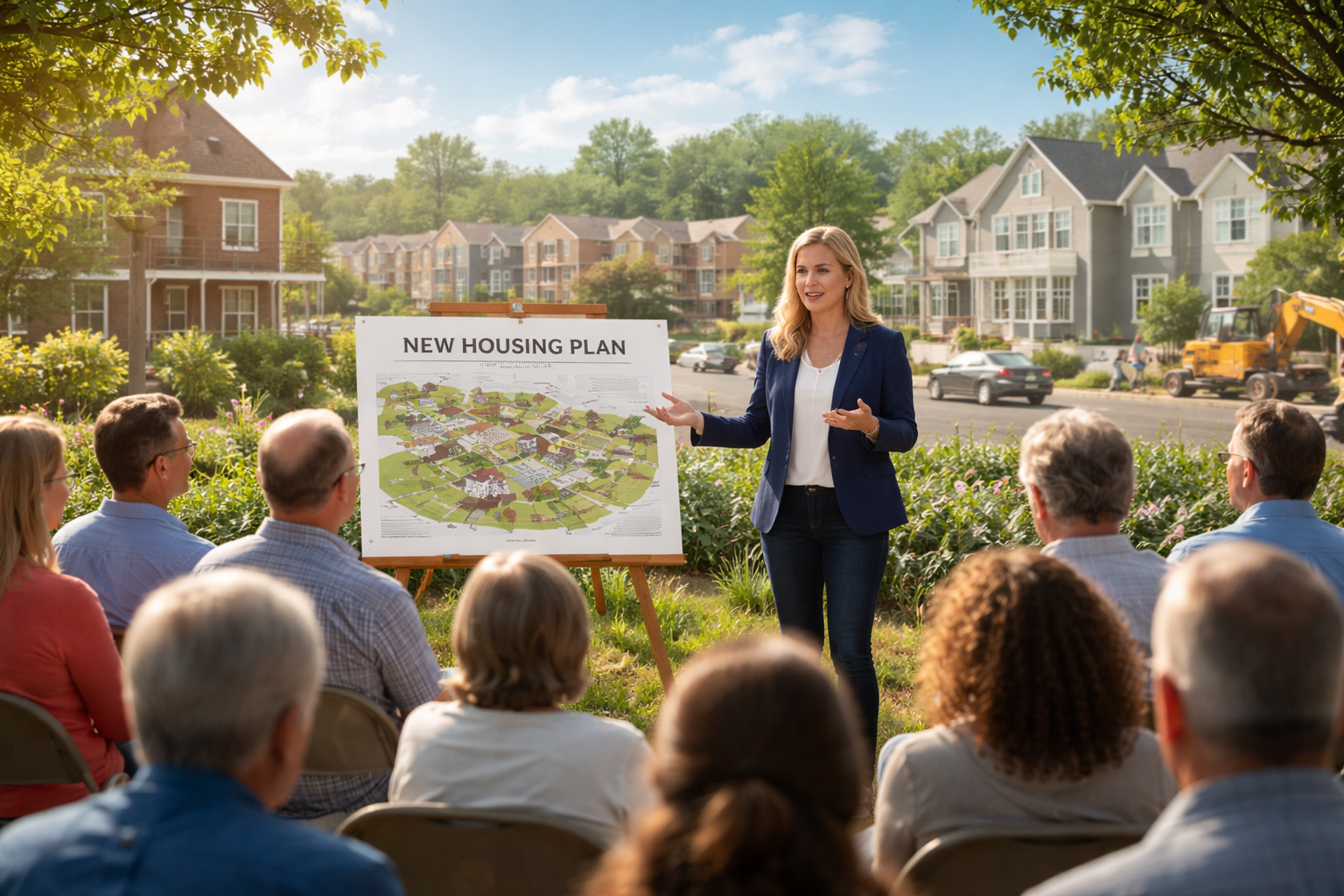
Virginia’s new governor, Abigail Spanberger, has laid out a housing strategy that avoids mandates and instead leans heavily on incentives. Rather than forcing cities and counties to rezone or approve projects, the state wants to reward the local governments that make it easier to build.
The core idea is simple. If a locality updates zoning rules, allows more housing types or speeds up approvals, the state will be more likely to support them with funding, infrastructure dollars and planning assistance. Communities that choose not to participate won’t face penalties, but they may find themselves lower on the priority list when state resources are handed out.
Another major focus is reducing bottlenecks. Many local governments agree that more housing is needed but lack the staffing, expertise or clear guidance to make smart changes. The administration wants the state to act as a partner by offering technical support, model zoning ideas and planning tools that help communities move forward without guesswork.
The approach also tries to stay politically realistic. Instead of pushing dense development everywhere, the messaging centers on practical options like townhomes, duplexes, accessory dwelling units and small multi unit buildings. These types of housing add supply without radically changing the look or feel of a neighborhood.
Overall, the goal is to increase housing supply while respecting local control. By using funding and cooperation instead of enforcement, the administration hopes to build long term buy in rather than spark resistance.
Overall, I welcome the initiative, but have been around long enough to know who created many of the existing housing policy barriers that Spanberger is attempting to bypass / plow through now. Always with good intention, but with piles of additional bureaucracy.